

Our Office
Visit Us Online
Your oral health is the priority. At Londonderry Family Dentistry, we take a conservative approach and explore all reasonable options to preserve your natural tooth whenever possible. When extraction becomes the best path forward, our team focuses on safety, comfort, and clear communication so you understand why removal is recommended and what to expect next.
Tooth extraction is a common procedure, but the reasons behind it vary widely — from developmental issues in children to advanced disease in adults. Our goal is to help you make informed decisions by explaining the rationale, the options for care afterward, and how we minimize discomfort throughout the process.
Primary (baby) teeth that fail to fall out as expected
Sometimes a child's baby tooth remains firmly in place while the permanent tooth below it prepares to erupt. If a primary tooth is fused to the bone or its roots don't resorb normally, it can block proper development. Extracting the retained tooth at the right time can guide eruption and help avoid orthodontic complications later on.
Permanent teeth with extensive decay that cannot be repaired
Cavities progress deeper over time. When decay has destroyed too much of the tooth structure or reached the nerve in a way that makes restoration impractical, removal may be the safest choice. Extracting a non-restorable tooth stops the spread of infection and protects neighboring teeth and tissues.
Teeth fractured beyond repair
Severe cracks or breaks — especially those that extend below the gum line or involve the root — sometimes leave too little sound structure to support a crown or restoration. In those cases, extraction prevents ongoing pain and reduces the risk of infection or repeated, ineffective treatments.
Teeth affected by advanced periodontal (gum) disease
When gum disease has caused significant bone loss or loosened teeth, extraction may be necessary to preserve overall oral health. Removing severely compromised teeth can make it easier to treat surrounding tissues and plan for stable restorative options once the mouth has healed.
Wisdom teeth that are impacted, misaligned, or causing problems
Third molars frequently encounter space limitations during development. Impacted or improperly positioned wisdom teeth can damage adjacent teeth, harbor decay, or create chronic inflammation. Early assessment helps determine whether removal now will prevent future complications.
Extractions as part of an orthodontic plan
When jaw size and tooth size are not well matched, selective extractions can create the space needed to align teeth and establish a healthy bite. In some orthodontic plans, removing specific teeth helps achieve a more stable, functional, and aesthetic outcome.

We begin every case with a careful review of your medical and dental history. That helps us identify any health conditions or medications that could affect treatment, and it lets us tailor the plan to your needs. If additional precautions are required — such as antibiotic coverage or medical clearance — we will explain them before scheduling.
To evaluate the tooth and surrounding structures, we routinely use digital radiographs. These images allow us to assess root shape, bone support, and proximity to vital structures so we can choose the safest technique. We’ll discuss whether your case is straightforward or if it will require a more complex surgical approach.
Our team prioritizes comfort at every step. Local anesthesia is used to numb the area thoroughly, and for patients who feel anxious or prefer extra calming measures, we offer sedation options to reduce stress and improve the overall experience.
Non-surgical, or "simple," extractions are used when the tooth is visible and the root anatomy is favorable. After effective local numbing, the dentist gently loosens the supporting periodontal attachments and removes the tooth with forceps. The technique emphasizes precision and minimal trauma to surrounding tissues.
Even with a simple extraction, we take time to make sure you're comfortable. We explain each step before it happens and monitor your comfort throughout. When appropriate, we place protective gauze and give clear instructions for the first hours of recovery to manage bleeding and swelling.
If nerves are a concern or your anxiety is high, we can discuss sedation dentistry to make the appointment less stressful. Our team will review medical considerations and obtain your informed consent before proceeding with any sedative medications.
Surgical extractions are recommended for teeth that are broken at the gum line, impacted, ankylosed, or otherwise inaccessible with routine forceps. This procedure may involve a small incision in the gum, careful removal of a bit of bone, or sectioning the tooth into pieces to allow safe extraction while protecting adjacent structures.
In complex situations, we may coordinate care with an oral and maxillofacial surgeon who specializes in surgical tooth removal. Whether performed in our office or by a specialist, the focus is the same: precise technique, thorough anesthesia, and tailored aftercare instructions to support healing.
We will always review possible sedation options, antibiotic needs, and post-operative expectations ahead of time so you know what to anticipate and how to prepare for a smooth recovery.

Healing after an extraction varies by the complexity of the removal and individual health factors. We provide specific post-operative directions based on your procedure, but there are common practices that help most patients recover quickly and comfortably. Following these steps reduces the risk of complications and supports tissue repair.
If you were given prescriptions — for antibiotics or pain control — follow them exactly as written. Contact our office if you have concerns about medication interactions or if side effects occur. Keeping a clear line of communication with the dental team helps us address problems early and adjust care when needed.
It’s normal to experience some swelling and mild discomfort during the first few days. Cold therapy, rest, and sensible activity restrictions usually manage these symptoms effectively. We’ll advise you on when to return to normal activities based on how your recovery is progressing.
Control bleeding with gentle pressure
You’ll be asked to bite on gauze placed over the extraction site to help a clot form. Replace the gauze as directed and maintain firm, steady pressure. A small amount of blood-tinged saliva is normal for up to 24 hours; contact us if heavy bleeding persists.
Protect numb tissues until feeling returns
Don’t chew, drink hot liquids, or touch the area until the local anesthetic wears off. Accidental biting of lip, cheek, or tongue can cause injury while sensation is diminished.
Take medications as directed
Follow your prescription instructions carefully.
Antibiotics:
If prescribed to prevent or treat infection, complete the entire course even if you feel well.
Pain relief:
Begin with over-the-counter or prescribed pain medication according to the schedule we provide. Taking a dose before the anesthetic fully wears off can improve comfort.
Preserve the clot — avoid suction and rinsing
For the first 24–48 hours, refrain from vigorous rinsing, spitting, using a straw, or other activities that could dislodge the forming clot. A stable clot is essential for proper healing.
Manage swelling with short ice intervals
Apply an ice pack to the cheek over the area for 10 minutes at a time during the first 24 hours to minimize swelling. After the first day, warm compresses can help if stiffness persists.
Avoid tobacco
Smoking interferes with clot formation and slows healing. Avoid cigarettes and other tobacco products for at least one week after the extraction, or longer if advised.
Choose gentle foods and stay hydrated
Start with cool, soft items such as broths, smoothies, yogurt, and mashed foods. Avoid extremely hot, spicy, or crunchy items that could irritate the site. Drink plenty of fluids but avoid carbonation and alcohol initially.
Keep your mouth clean without disturbing the site
Resume gentle toothbrushing the day after surgery, taking care around the extraction area. After 24–48 hours, gentle rinses with a warm saltwater solution can soothe tissues and promote cleanliness.
Follow-up visits
If sutures were placed or your case requires monitoring, we will schedule a follow-up appointment. Keeping that visit ensures healing is on track and helps us plan any next steps, such as tooth replacement.
Contact our office if you develop increasing pain, a persistent bad taste, worsening swelling, or other unexpected symptoms. Early communication allows us to evaluate and treat complications promptly.
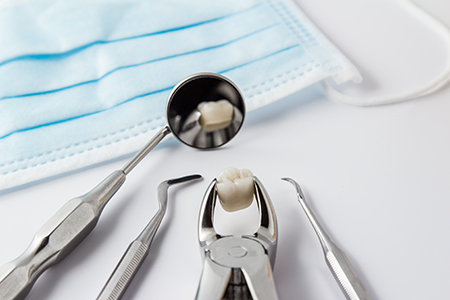
When extraction is the recommended course, you want a team that balances clinical skill with gentle care. Our clinicians combine advanced training with modern diagnostic tools so we can make thoughtful treatment decisions tailored to each patient’s situation. We emphasize clear explanations, realistic expectations, and coordinated care when additional specialists or restorative planning is needed.
After an extraction, we’ll review appropriate replacement options such as dentures, fixed bridges, or dental implants and help you determine the timing and approach that best fits your oral health and lifestyle. Our aim is to restore comfort and function while preserving long-term health and aesthetics.
Extractions are sometimes necessary to stop disease, relieve pain, or support a healthy, functional bite. When removal is recommended, the procedure and recovery can be straightforward with proper planning and follow-up. Our team is committed to delivering safe, compassionate care and helping you move forward with confidence.
If you have questions about tooth extraction or would like to discuss your treatment options, please contact us for more information.
Tooth extraction is recommended when a tooth cannot be restored or when it poses a risk to overall oral health. Common reasons include extensive decay that destroys the supporting structure, severe infection that does not respond to other treatments, advanced periodontal disease with significant bone loss, trauma that leaves the tooth fractured beyond repair, or teeth that are impacted and causing damage to adjacent teeth. Extractions are also performed as part of orthodontic planning or when retained primary teeth block proper eruption of permanent teeth.
We take a conservative approach and evaluate all possible restorative options before recommending removal. The decision is based on clinical exam, digital radiographs, and your general health so that treatment is tailored to your needs. At Londonderry Family Dentistry we explain the rationale, outline alternatives, and review the next steps so patients can make informed choices.
A simple extraction is performed on teeth that are visible in the mouth and have a straightforward root anatomy; it is done with local anesthesia and forceps after the supporting tissues are loosened. These procedures are generally quicker and cause less tissue disruption, making them appropriate for many unrestorable or problematic teeth. The dentist will describe the expected steps and manage your comfort throughout the procedure.
Surgical extraction is used when a tooth is broken at gum level, impacted, ankylosed, or otherwise inaccessible with routine forceps. This approach can include a small incision in the gum, removal of a bit of bone, or sectioning the tooth into pieces to enable safe removal while protecting adjacent structures. Complex cases may be coordinated with an oral and maxillofacial surgeon to ensure the safest outcome and proper aftercare.
Preparation begins with a thorough review of your medical and dental history so we can identify conditions or medications that affect treatment, such as blood thinners, bleeding disorders, or immune-suppressing medications. Your clinician may request medical clearance or adjust medications in coordination with your physician when necessary. It is important to disclose all prescriptions, over-the-counter drugs, and supplements to avoid interactions with any sedatives or antibiotics that might be used.
On the day of the procedure follow the specific instructions provided for any sedation or anesthetic plan; for some sedative approaches fasting is required and you should arrange transportation home. Wear comfortable, loose clothing and avoid heavy makeup or jewelry that could interfere with monitoring. Bring a list of questions and any recent imaging or records if requested so the team has the complete information to proceed safely.
Local anesthesia is used in nearly all extractions to numb the area around the tooth and block pain during the procedure. For patients with dental anxiety or for more complex surgical removals, additional options such as nitrous oxide (laughing gas), oral conscious sedation, or intravenous (IV) sedation may be offered to provide relaxation and amnesia for the appointment. Your medical history, level of anxiety, and the complexity of the extraction help determine the most appropriate sedation choice.
Before any sedative medication is used the team will review risks, benefits, and pre-procedure instructions to ensure safety. Patients receiving moderate or deep sedation typically need a responsible adult to drive them home and should follow post-sedation activity restrictions until fully recovered. We screen carefully and tailor sedation to each patient to optimize comfort while minimizing risk.
Initial healing typically involves forming a blood clot at the extraction site, mild to moderate swelling, and controllable discomfort for the first few days. Managing bleeding with gentle pressure, applying short bouts of cold therapy to the cheek, and taking prescribed or recommended pain medications helps most patients remain comfortable. It is important to avoid activities that could dislodge the clot, such as vigorous rinsing, spitting, using a straw, or smoking during the first 24–72 hours.
Soft, cool foods and adequate hydration support recovery while you gradually return to normal eating as comfort allows. Most soft tissue healing occurs within one to two weeks, though full bone remodeling may take several months depending on the extent of the extraction. A follow-up visit will be scheduled when sutures are placed or when monitoring is advisable to confirm proper healing and plan any restorative steps.
While extractions are routine, complications can occur and include prolonged bleeding, infection, dry socket (loss or dislodgement of the clot), and, rarely, nerve irritation or sinus communication when upper posterior teeth are involved. Signs of complications include increasing pain after a few days, persistent or worsening swelling, fever, a foul taste or odor, or numbness that does not improve. Prompt evaluation helps determine the cause and appropriate treatment.
Management strategies depend on the complication and may include local measures such as medicated dressings for dry socket, antibiotics for infection when indicated, additional wound care, or referral to a specialist for complex problems. We emphasize early communication so issues are addressed quickly and healing can be supported with targeted interventions and clear follow-up instructions.
Wisdom teeth are evaluated on an individual basis using clinical exam and radiographs to determine their position, potential for eruption, and relationship to neighboring structures. Removal is commonly recommended for teeth that are impacted, misaligned, causing or threatening to cause damage to adjacent teeth, associated with recurrent decay or infection, or contributing to chronic inflammation. In some cases, asymptomatic wisdom teeth may be monitored rather than removed if they are well aligned and fully functional.
Timing is important because earlier removal—when appropriate—can reduce the risk of complications and make surgery technically easier in many patients. Factors such as patient age, medical history, anatomy of the jaw, and presence of symptoms guide the recommendation. Your dental team will explain the expected benefits and risks so you can decide with a clear understanding of the likely outcomes.
Yes, extractions for both pediatric and adult patients are commonly performed in a general dental office when the case is appropriate for that setting. For children, extractions address retained primary teeth that impede eruption of permanent teeth, caries that cannot be restored, or traumatic injuries; the approach emphasizes behavior management and gentle techniques suited to the child’s needs. Adults may require simple or surgical extractions depending on the tooth condition and surrounding anatomy.
When a patient’s medical complexity, level of anxiety, or the technical difficulty of the extraction exceeds what can safely be managed in the office, the clinician will recommend referral to a specialist. Whether treatment occurs here or with a specialist, the priority is safe, comfortable care with clear instructions for preparation and recovery.
Several tooth replacement options may be appropriate depending on your oral health, bone support, and personal goals, including dental implants, fixed bridges, and removable partial dentures. Dental implants restore a single missing tooth or multiple teeth with a prosthesis anchored into the jaw and are often chosen for long-term function and preservation of surrounding bone. Fixed bridges use adjacent teeth as supports to replace a missing tooth, while removable partial dentures restore function and appearance without altering neighboring teeth extensively.
Timing and planning are important; in some cases, immediate replacement is possible, while in others it is advisable to allow healing or perform grafting to optimize outcomes. Your clinician will review the advantages and clinical considerations of each option and coordinate restorative or specialist care as needed to develop a treatment plan tailored to your mouth and lifestyle.
Contact the dental office promptly if you experience heavy or prolonged bleeding that does not respond to gentle pressure, increasing or severe pain that is not controlled by medications, signs of spreading infection such as fever or rapidly worsening swelling, or persistent numbness beyond the expected anesthetic effect. A persistent bad taste or odor, difficulty breathing or swallowing, or any sudden change in your condition also warrants immediate attention. These symptoms can indicate complications that require timely evaluation and care.
If you have routine concerns such as questions about pain control, medication side effects, or normal swelling and recovery timeline, call to speak with the dental team for guidance. The office will advise whether you need to be seen for an urgent evaluation, a follow-up appointment, or simple at-home measures to support healing. Clear communication helps ensure a safe recovery and appropriate next steps when additional treatment is necessary.
